
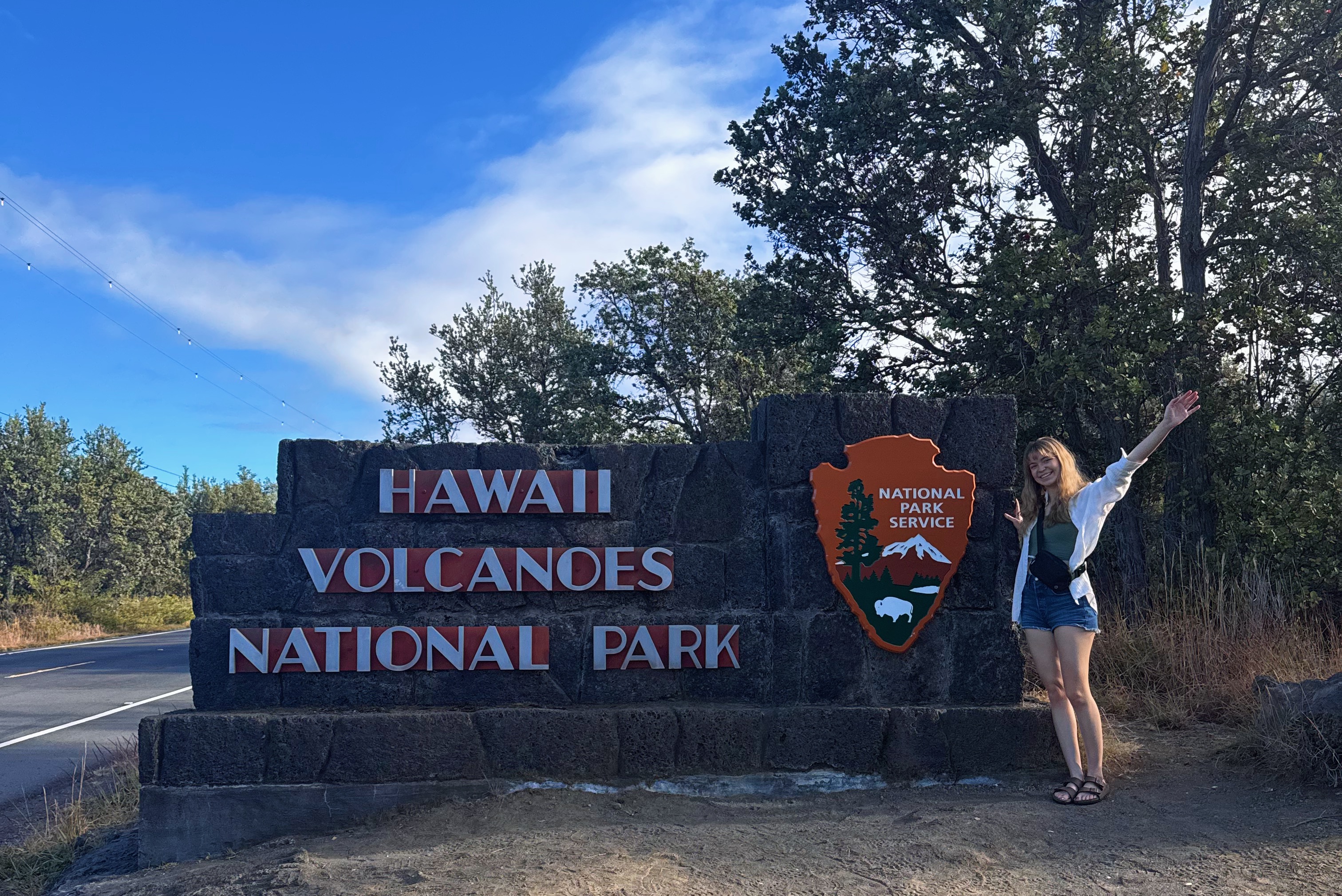
Hawaii Volcanoes National Park is a must-visit destination on the Big Island, offering a mesmerizing combination of natural beauty and geological wonders. From witnessing active volcanoes to exploring lush rainforests and lava tubes, the park provides a unique and unforgettable experience.
With just one day to explore, you’ll want to make every moment count. This guide will help you plan the perfect itinerary!
Table of Contents
Basic Hawaii Volcanoes National Park Facts
- Location: Big Island of Hawaii
- Size: Over 333,000 acres, spanning diverse landscapes
- Best Time to Visit: Early morning or late afternoon to avoid crowds
- Key Attractions: Kīlauea, Mauna Loa, Chain of Craters Road, and Thurston Lava Tube
- Wildlife: Nēnē geese, hawks, and other unique Hawaiian species
- Climate: Tropical at lower elevations; cooler and rainier at higher altitudes
- Annual Visitors: Approximately 1.5 million
How much time do you need for Hawaii Volcanoes National Park?
While the park is on the larger side, 1/2 to 1 day is plenty of time to hit the highlights. With careful planning and an early start, you can enjoy many of the park’s most iconic sights and enjoy a few hikes.
Dining and Lodging Options in and Around the Park
Dining
Within Hawaii Volcanoes National Park, the Volcano House’s dining room offers a sit-down meal with views of Kīlauea. For a quick bite, the nearby Volcano Village has local cafés like the Tuk-Tuk Thai Food Truck and Lava Rock Café. Packing snacks or a picnic lunch is also a great option.
Lodging
For accommodations, the Volcano House inside the park offers cozy rooms with unbeatable views of the crater. Alternatively, Volcano Village, just a short drive from the park entrance, has a variety of vacation rentals, inns, and bed-and-breakfast options. For those seeking a more adventurous experience, there are also campgrounds like Nāmakanipaio and Kulanaokuaiki.
It is also common to stay elsewhere on the island, like in Hilo or Kona, and drive to the Volcano area for a day trip.
One Day in Hawaii Volcanoes National Park Itinerary
Parking lots can fill up quickly, so I recommend starting your day in Hawaii Volcanoes National Park early. I also recommend starting your day off at the Kīlauea Visitor Center. Here, you can gather valuable information about current park conditions, and find out if the volcano, Kīlauea, is actively erupting. The visitor center also features engaging exhibits about the park’s volcanic history and cultural significance, providing the perfect introduction to your adventure.
Crater Rim Drive and Chains of Crater Road
The Crater Rim Drive is the main road that weaves through the park. It once looped all the way around the Halema’uma’u Crater prior to its eruption in 2018. Now, it abruptly cuts off at the start of the Chains of Crater Road, which takes you down to the cost.
This road offers plenty of scenic viewpoints of craters, stunning views of the Pacific Ocean, and many hiking trails. The drive from the visitor center to Hōlei Sea Arch is roughly 20 miles and takes about 40 minutes one-way. You can either make your stops on the way down, or drive straight through to the coast and make your stops on the way back. Because some of the early on stops can get pretty busy later on in the day, I recommend making your stops on the way down.
Here are some of the cannot-miss stops:
Kīlauea Iki & Crater Rim Trail

One of the first stops you will want to make on your drive is the Kīlauea Iki Overlook, which provides a breathtaking view of the Kīlauea Iki Crater from above. You can then decide if you want to hike down to the crater floor and experience Kīlauea Iki from a new perspective.
The Kīlauea Iki & Crater Rim Trail is a moderately challanging 3.2-mile loop with 741-feet of elevation gain.
This hike is a must-do for visitors seeking an unforgettable hiking experience in Hawaii Volcanoes National Park. This loop trail takes you through a variety of landscapes, offering a unique perspective on the park’s volcanic features. Starting in a lush rainforest, you’ll descend into the Kīlauea Iki Crater, where you can walk across what was once a molten lava lake during the 1959 eruption.
Thurston Lava Tube


Next, head to the Thurston Lava Tube, a short and easy hike through a lush rainforest leading to a massive tunnel carved by ancient lava flows. Walking through a lava tube in Hawaii Volcanoes National Park is an unforgettable experience. When is the next time you are going to hike through a lava tube in Hawaii?
Although parking fills up fairly quickly, the entire loop is only .4-mile long, so cars come and go frequently. You also have the option to park at the Kīlauea Iki Overlook, which provides a bigger lot, and hike the extra half mile to the trailhead.
Holei Sea Arch

At the end of the Chains of Crater Road, you will find the Holei Sea Arch, a stunning natural formation, shaped by lava and waves. Although, you can only view it from a distance, the sight is definitely worth a quick stop.
Additional Hikes
In addition to the numerous viewpoints scattered and the hikes listed above, Hawaii Volcanoes National Park offers several trails to explore if you choose to extend your visit. These trails provide a closer look at the park’s fascinating landscapes and geological wonders. Here are a few recommendations:
Devastation Trail
Pu’upua’i Overlook via Devastation Trail is an easy, 1-mile hike that leads you through a landscape of cinder and ash left behind by the 1959 Kīlauea Iki eruption. The trail is paved, making it an excellent warm-up hike and an opportunity to explore more of the park.
Pu‘u Loa Petroglyphs
Pu’uloa Petroglyphs is an easy 1.4 mile out-and-back hike that takes you to the largest petroglyph field in Hawaii. The Pu‘u Loa Petroglyphs Trail leads you across a lava field to a boardwalk that protects and showcases ancient carvings made by Native Hawaiians. These carvings offer a glimpse into the cultural history of the island, depicting symbols that range from family lineage to celestial navigation.
Halema’uma’u Steam Bluff and Sulfur Banks
Halema’uma’u Steam Bluff and Sulfur Banks is an easy, 1.4-mile loop that takes you through a unique landscape filled with vibrant sulfur crystals, steaming vents, and colorful mineral deposits. Although the trail begins near the Kīlauea Visitor Center, I recommend saving it for after visiting the more popular spots.




Leave a Reply