
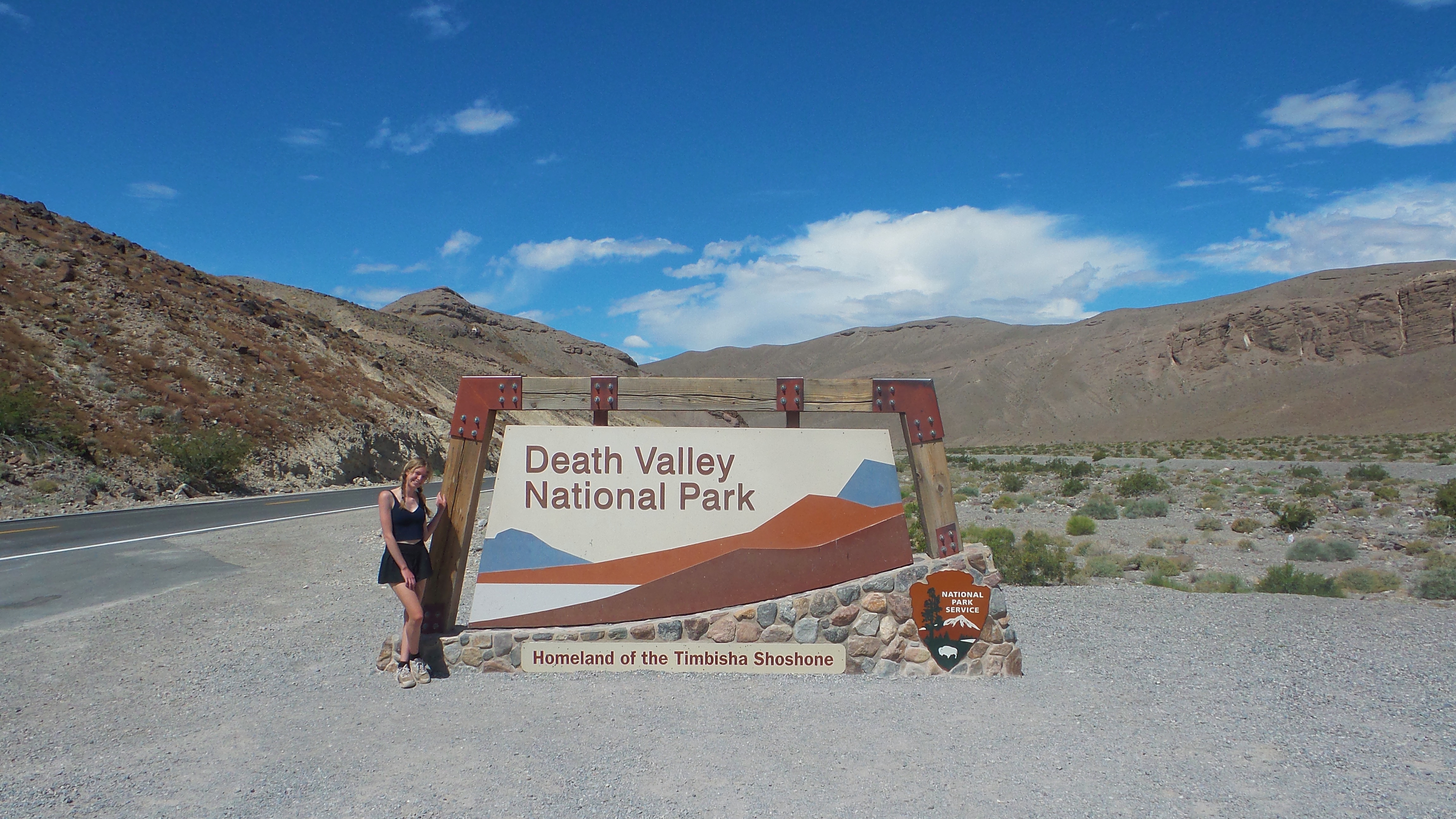
Death Valley National Park is a land of extremes. As the largest national park in the continental United States, it encompasses approximately 3.4 million acres of diverse landscapes. Death Valley also features the lowest point in North America at Badwater Basin, 282 feet below sea level, and the highest recorded temperature on Earth, a scorching 134°F (56.7°C) at Furnace Creek.
The park’s name may suggest a desolate and lifeless place, but Death Valley is anything but barren. It is a mosaic of salt flats, sand dunes, badlands, valleys, canyons, and mountains. Despite its harsh environment, it supports a surprising array of life, including over 1,000 species of plants and various animals like bighorn sheep, coyotes, and roadrunners.
Whether you’re exploring its historic sites or soaking in its natural beauty, Death Valley National Park provides an unforgettable journey into one of the planet’s most unique and intriguing landscapes.
Table of Contents
Basic Death Valley National Park Facts
- Location: Primarily in California, with a small portion extending into Nevada
- Established: October 31, 1994, as a national park (previously a national monument since 1933)
- Size: Approximately 3.4 million acres, making it the largest national park in the continental United States
- Lowest Point: Badwater Basin, at 282 feet below sea level, is the lowest point in North America
- Hottest Temperature: Recorded a temperature of 134°F (56.7°C) at Furnace Creek on July 10, 1913, the highest temperature ever recorded on Earth
- Elevation: The park spans from 282 feet below sea level at Badwater Basin to 11,049 feet above sea level at Telescope Peak.
- Geological Features: Features a diverse range of landscapes including salt flats, sand dunes, badlands, valleys, canyons, and mountains
- Flora and Fauna: Despite its harsh conditions, the park is home to over 1,000 species of plants and numerous animal species, including bighorn sheep, coyotes, and roadrunners
- Climate: Known for its extreme heat, particularly in the summer; winters are mild with occasional rainfall.
- Visitation: Receives around 1 million visitors annually
Is One Day Enough for Death Valley National Park?
While Death Valley is a huge national park, one day can get you to many of the main highlights. Plus, the extreme heat conditions, particularly in the summer, make a shorter visit more manageable. However, if you are looking to get to more of the park, or have time to relax at the lodge, than you should consider extending your trip.
Dining and Lodging in Death Valley National Park
Dining in Death Valley
Fortunately, there are several dining options in Death Valley. The Oasis at Death Valley is the most popular dining destination with everything from fine dining to a rustic ice cream parlor. But, there are also a few other restaurants and small general stores scattered throughout the park
Lodging in Death Valley National Park
Death Valley is known for its luxurious lodging. Consisting of two beautiful hotels, an 18-hole golf course, tennis courts, and a pool, The Oasis at Death Valley is not what you would expect to find in your average national park. Nonetheless, if you are looking for a relaxing, but pricey, experience, this is the perfect option for you. Outside of The Oasis, Stovepipe Wells Village and the Panamint Springs Resort both offer a variety of lodging options.
While I am typically a huge advocate for camping in a national park, this may not be the best option here. Depending on when you visit, Death Valley may be super hot, humid, and buggy. But, if you are going in a cooler season and are looking to camp, there are several campgrounds throughout the park. Most are first-come first-served or available to reserve through the resort websites, with the exception of Furnace Creek Campground. Furnace Creek Campground is the most popular campground and typically reservable mid-October through mid-April.
One Day in Death Valley National Park Itinerary
Death Valley does not get as crowded as many of the other more popular national parks, so timing is not too important. You will rarely come across a full parking lot or encounter long lines to hike the trails. Still, with how large the park is, it is good to plan out your day in advance, so you don’t have to do much backtracking. This is the itinerary I would follow with only one day in the park!
Keep in mind that many roads in Death Valley require 4-wheel drive.
Zabriskie Point


If you enter the park on CA 190 from Death Valley Junction, CA, Zabriskie Point will be one of the first spots you pass as you make your way through the park.
Zabriskie Point is easily one of the best overlooks in the entire park. It is also a very popular spot to watch the sunrise if you arrive early enough. A short uphill hike from the parking lot, Zabriskie Point offers stunning views of Death Valley’s badlands. The golden hues cast over the badlands make it a favorite for photographers and visitors alike.
If you do decide to visit Zabriskie Point for sunrise, I recommend arriving 20-30 minutes early to ensure you get a good spot at the top!
Golden Canyon


Before the afternoon heat kicks in, it is a great time to take a hike! Golden Canyon is one of the most popular hiking destinations in the entire park with a few different variations for you to choose from:
Golden Canyon and Gower Gulch Loop via Zabriskie Point: Right from Zabriskie Point, you have the choice to complete this moderately challenging 6.4-mile loop. This hike not only takes you through the Golden Canyon, but also to the Manly Beacon and the Red Cathedral. While this hike allows you to see more of the park, the heat can make it much more challenging.
Golden Canyon: Beginning at the Golden Canyon trailhead, this is a short .8-mile out-and-back hike with 118-feet of elevation gain. While this can be a quick hike you can also take the time to explore the Gold Canyon and do some rock scrambling.
Gower Gulch Loop: This is a moderately challenging 4.1-mile loop with 702-feet of elevation gain. Also beginning at the Golden Canyon trailhead, this hike allows you to enjoy more views of Death Valley’s unique landscape.
Badwater Basin


As you drive down Badwater Basin Road you will hit several attractions, but keep driving until you reach the Badwater Trailhead.
You have reached Badwater Basin, the lowest point in North America!
Technically, there is a hike here that takes you across the salt flats. However, I recommend just exploring the immediate area. The views don’t differ too much the further you go. Still, the vast, white salt flats stretch endlessly, offering a surreal and unique landscape. Watch your step though! The salt flats can be pretty slushy in some spots.
Natural Bridge


From Badwater Basin, make your way back up the road until you hit the pull-off to the Natural Bridge Canyon Trailhead. Keep in mind that this is a bumpy dirt road that requires 4WD. So, I wouldn’t attempt to drive up it if you are not in the proper vehicle.
The Natural Bridge Canyon Trail is a moderately challenging 1.4-mile out-and-back hike that takes you to, of course, a natural bridge, and some pretty cool dry falls. With 449-feet of elevation gain up a mostly gravel trail, it can be relatively challenging at times, but I think it’s worth it!
Devil’s Golf Course

A little further up the road, you will reach the pull-off to Devil’s Golf Course. Sometimes this road is closed to cars, but it is only a short walk to the site.
The Devil’s Golf Course is a vast salt pan covered with jagged, crystallized salt formations. These sharp, spiky salt mounds were formed by the evaporation of ancient lakes, creating an otherworldly landscape. The name comes from the saying that “only the devil could play golf” on such rough terrain. The salt formations are fun to explore if you watch your step!
Artists Drive

Artist’s Drive is a roughly 9-mile one-way road that winds through some of Death Valley’s most colorful landscapes. The drive takes you past a series of hills and canyons that are vividly colored by various mineral deposits.
There are several pullouts along the scenic route to get out and explore the hills on your feet. On my trip to Death Valley, I spent roughly an hour walking around taking photos and soaking in the views!
I saved this drive for the end of the day since the colors are typically more vivid in the late afternoon/evening!
Stovepipe Wells
Depending on how much time you spend at each attraction, this itinerary should keep you busy for the majority of the day. But, it does limit you to just one area of the park when there is so much more to see!
With extra time, I recommend driving roughly 45-minutes through the park to the Stovepipe Wells area. Stovepipe Wells has gas, some food options, and some pretty cool attractions in the area.
I recommend hiking Mosaic Canyon Trail or exploring the Mesquite Dunes!


Leave a Reply